I was watching an interview with Alexandr Wang on the David Senra show, where Wang covered how he and his team recently shipped Meta Muse, an AI personal assistant. Two things I found striking were 1) how the prototype was done in 1-2 weeks and already had many of the core elements of the final product, and yet 2) the team spent the next 7 months turning it into a product that users can trust. What happened in those 7 months, and why that was necessary, is the topic of this post.

(From the David Senra Show, October 11, 2026, link to episode)
The quick prototype phase makes sense if you understand where the idea came from. Muse did not have to reinvent what a personal agent could do since the concept was already proven. Rewind back to the beginning of 2026, when OpenClaw was top news in Silicon Valley. OpenClaw was arguably the first AI agent to come into public view. It gave people plenty of magic moments. Several of those working on Muse, including former CEO of GitHub Nat Friedman, were avid users of OpenClaw. Friedman himself publicly admits that Muse was heavily inspired by OpenClaw.
Now, contrast that with what was wrong with OpenClaw, since that’s where the 7-month grueling phase came from. The problem is that it was still somewhat like playing a lottery ticket: sometimes it would be brilliant, while other times it would break spectacularly and in unexpected ways, which to me defines what a spiky technology is. For personal AI agents, where the potential downsides included horror stories such as OpenClaw deleting all of your emails or hacking into other people’s systems without permission, such spikiness made the technology too risky outside a few dedicated users.
AI agents are built on non-deterministic LLMs as their underlying technology, which made this flaw very difficult to remedy. But the interview also reveals why there was no other way around it. User trust. Friedman circulated an internal memo called “Trust is a Must”, which became the soul of the development team. The spikiness had to be tamed. There was no alternative.
So how do you fix the flaw in this case? Wang’s tool of choice was the spreadsheet. His team created a spreadsheet with 100+ behaviors required of a reliable personal agent. Being green on 80 and red on 20 was not enough. The minimum threshold had to be met on all 100+ of them. Strength in one capability cannot compensate for weakness elsewhere, since users don’t experience the average. They experience the red rows.
Interestingly, despite AI agents being a brand new phenomenon and technology, the shifting of focus from functionality to reliability is an old pattern. In the business classic Innovator’s Dilemma (1997), Clayton Christensen says that new products first compete on functionality, then reliability, then convenience, and then price. If OpenClaw competed on functionality, Muse is attempting to compete on reliability.
Andrej Karpathy calls this arduous reliability journey the “march of nines”. In the linked interview on the Dwarkesh podcast (Oct 2025), Karpathy explains how there were self-driving trucks on roads as early as 1986, built by researchers at Carnegie Mellon University. He also says he was in a Waymo demo car ride in 2014, which he describes as a “perfect drive” around Palo Alto, CA. Self-driving cars are another classic example of a product where there is a large distance between demoable functionality and reliability, primarily due to the consequences of failure being very high. In such systems, getting from 0% to 90% reliability might be an easier undertaking than going from 99.9% to 99.99% reliability.
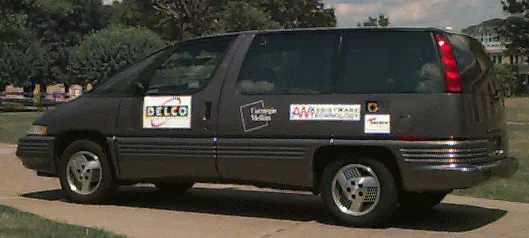
(A 1995 self-driving car, Navlab 5, built by researchers at Carnegie Mellon University (CMU). Picture taken from CMU’s CS department webpage. In 1995, autonomous driving was already advanced enough to mostly drive itself from Pittsburgh, PA to San Diego, CA, a drive of 2850 miles, only requiring human steering on 50 miles. However, the researchers still controlled the accelerator and the brakes throughout the trip.)
Only time will tell if Meta Muse will stick as a product. There are plenty of products that had a glitzy launch and then fizzled out. But when a technology is spiky and consequences are large, the dogged refocus on reliability by Meta is the correct one. This represents a shift from optimization for the best possible experiences to eliminating the worst ones. For AI agents, the worst row is the product.